
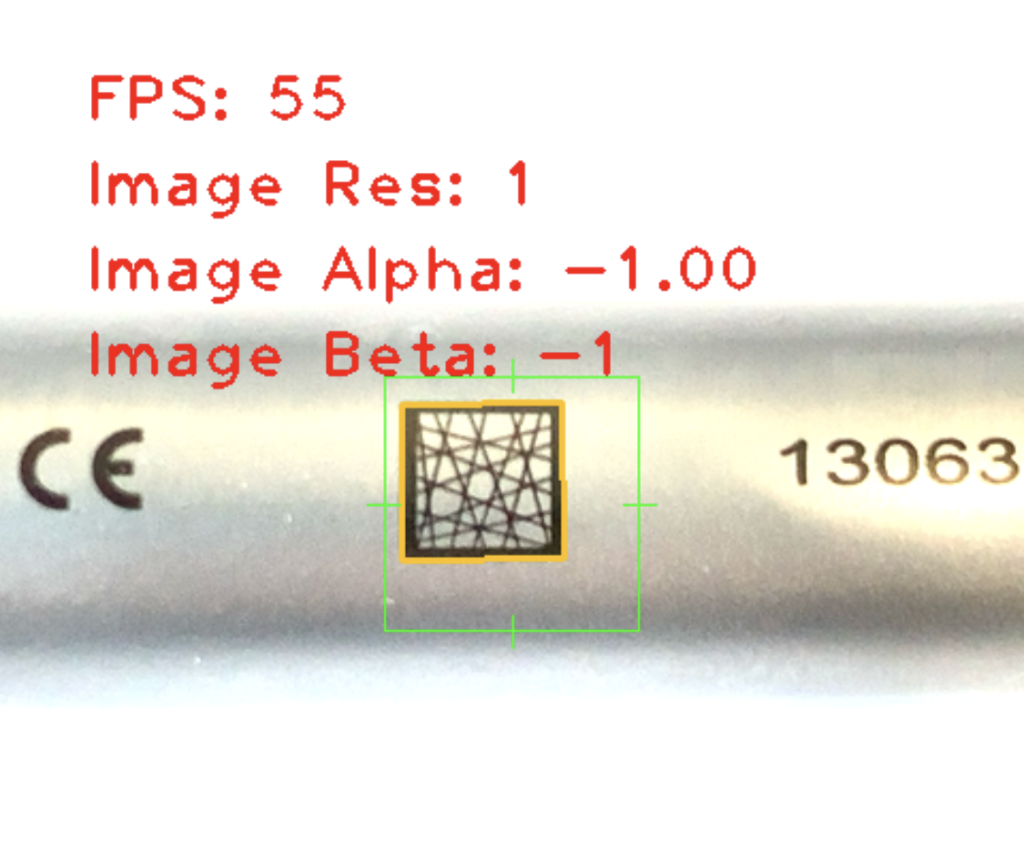
Seeing the Invisible: How Computer Vision, AI, and ML Are Transforming Small Object Recognition in MedTech
In modern healthcare, some of the most critical assets are also the hardest to see. Tiny surgical instruments, complex tool assemblies, and subtle visual differences between nearly identical devices play an outsized role in patient outcomes, operating room efficiency, and hospital economics. Yet for decades, these small objects have remained largely invisible to digital systems—tracked manually, counted by hand, or inferred through incomplete data.
Computer vision has changed that.
By enabling machines to see, interpret, and understand the physical world, computer vision has become a foundational technology for small object recognition and analysis in the medical technology industry. When combined with artificial intelligence (AI) and machine learning (ML), it is redefining what’s possible in surgical instrument tracking, verification, and analytics.
Why Small Object Recognition Is So Hard in MedTech
Recognizing small surgical instruments is far more complex than identifying large, consumer-grade objects. In clinical environments, systems must contend with:
- Minimal visual features on small or polished instruments
- High reflectivity from stainless steel surfaces
- Occlusion and overlap when instruments are stacked or clustered
- Lighting variability in operating rooms and sterile processing departments
- Subtle differences between instruments that may differ by millimeters
Traditional barcode scanning, RFID tagging, and manual counts struggle in these conditions. Many instruments are too small to tag, too expensive to retrofit, or simply move too quickly through clinical workflows to track reliably.
This is where computer vision excels.
How Computer Vision Works in MedTech Applications
At its core, computer vision uses cameras and image sensors to capture visual data and convert it into machine-readable information. In medtech environments, this typically involves:
- Image Acquisition
High-resolution cameras capture images or video of surgical instruments during handling, use, or reprocessing. - Pre-Processing and Enhancement
Advanced image processing techniques improve contrast, reduce noise, normalize lighting, and isolate objects—critical steps for detecting small instruments. - Object Detection and Segmentation
Computer vision algorithms identify individual instruments, even when they are partially obscured or visually similar. - Feature Extraction
Fine-grained details—edges, contours, textures, proportions—are extracted to differentiate between nearly identical tools.
This visual foundation is what allows AI and ML to function effectively.
AI and ML: Powerful—but Blind Without Vision
AI and machine learning are often discussed as standalone solutions, but without computer vision, they are effectively blind.
AI and ML do not inherently understand the physical world. They require structured, meaningful inputs. In medtech, that input must come from visual data—images of instruments, trays, workflows, and usage patterns.
Without computer vision:
- AI cannot “see” an instrument
- ML cannot learn visual differences between tools
- Analytics cannot verify what was actually used
Computer vision is the sensory system, AI is the reasoning engine, ML is the learning mechanism.
Together, they form a complete intelligence stack.
How AI and ML Change the Playing Field
When computer vision is paired with AI and ML, systems move beyond simple detection to true understanding and prediction:
- Adaptive recognition improves accuracy over time as models learn from new instruments and conditions
- Automated classification distinguishes between similar tools without human intervention
- Usage analytics reveal how instruments are actually used, not how they were expected to be used
- Anomaly detection identifies missing, damaged, or incorrect instruments in real time
This combination dramatically reduces reliance on manual processes while increasing reliability, traceability, and insight.
iTRACE Medical: Expertise Where Vision Meets Intelligence
iTRACE Medical sits at the intersection of computer vision, AI, and ML—specifically focused on the challenges of small surgical instrument identification and analysis.
Our expertise lies not just in applying generic AI models, but in deeply understanding:
- The visual complexity of surgical instruments
- The operational realities of operating rooms and sterile processing
- The data integrity requirements of clinical and financial workflows
By leveraging advanced computer vision as the foundation, iTRACE Medical enables AI and ML systems to accurately identify, track, and analyze even the smallest surgical instruments—without tags, manual counting, or workflow disruption.
The result is a system that doesn’t just record data, but understands it.
The Future of MedTech Is Visual
As healthcare continues to digitize, the ability to see and understand physical assets will become increasingly critical. Computer vision is no longer an experimental technology—it is a competitive necessity.
AI and ML promise intelligence, automation, and insight.
Computer vision makes those promises real.
With deep expertise in combining these technologies, iTRACE Medical is helping the medtech industry finally see what has always been hiding in plain sight—and turn it into actionable intelligence that improves efficiency, accountability, and patient care.